Advocacy and some ways YOU can help!

There are some great minds and dedicated people advocating on behalf of lung cancer patients. We need them and I’m thankful for the work they do.  Many times they’ve been directly impacted by the disease, like these senators have:  Bipartisan legislation introduced to study lung cancer in women

You can help by calling, emailing, or writing  your Senators and Representatives.

Truth is, until recently there were very few lung cancer patients able to advocate for themselves as most were simply fighting for their life physically and in the moment, with no ability to fight in other ways. (433 Americans die daily from LUNG cancer.) With such dismal survival rates, few saw a future past that initial shock stage, and had no opportunity to reach a point where they even could consider advocacy.  But thankfully there are those survivors such as Bonnie Addario and Debbie Violette who not only survived and thrived, but took on the challenge of advocacy. I’m grateful to Bonnie (Bonnie Addario Lung Cancer Foundation), Debbie Violette (Free ME from lung cancer ), other survivor advocates, family member advocates, and others who take up this challenge on our behalf. ROS1cancer research is being conducted through the Bonnie Addario Lung Cancer Foundation

You can help by learning about lung cancer and sharing your knowledge with others.  Knowledge is power. Education is key.

And then, the elephant in the room.  Why, if so many more die of lung cancer than other cancers, is the funding so low?  It’s a sad, but easy answer.   There is the huge stigma associated with lung cancer – the thought that it is a smoker’s disease and we can simply eliminate it by not smoking.  Heart disease is also often caused by smoking – do we blame those with COPD for their condition and deny them research funding dollars?  Do we not help others with disease caused by addiction? And, come on folks, we all know that ALL YOU NEED TO GET LUNG cANCER would be… drum roll please… LUNGS, JUST LUNGS. We all have them, and even if you think you take care of them, you can get lung cancer.  I know.  And, we’re learning that more and more nonsmoking women are learning this the hard way – with a Stage IV lung cancer diagnosis.  So many are not lucky like me, and there is no targeted therapy drug for them that keeps the beast at bay while the next drug is being developed.  No cure  in sight, but great hope for lung cancer being a managed chronic disease in the not so distant future.

You can help by ending the stigma.  If you learn someone has lung cancer, DO NOT ask if he/she smoked please.  They have LUNG cancer.  Why should it matter to you if they smoked?  They have LUNG cancer.  Would you ask someone with breast cancer what they did to cause it?  Of course not.  A little compassion goes a long ways, please.  And chances are, sadly, if they are a nonsmoker they’ll be quick to tell you so, either because they’re still surprised or because of the stigma.  I know I did.  It’s really so weird when here you are dying and you think you have to defend yourself in some way.  Now, after two years, I can either say nothing, note that all you need (LUNGS), or share that radon is the second leading cause of lung cancer.

Advocacy: public support for a particular cause.  So please – no more stigma.  When you share that someone you know has LUNG cancer, please don’t feel embarrassed for them.  Speak up for them.  Explain that 433 Americans die every day of lung cancer.  Explain that funding is needed.  Wear LUNG cancer awareness apparel and jewelry just as you would to show support for those with any other cancer.

If you’re in the Washington D.C. area on April 26 there is a rally to promote awareness.  The hope is to have 433 people in attendance.  Life and Breath Rally info

My lung cancer advocacy work: serving on a stakeholders advisory board to Maine Lung Cancer Coalition (MLCC) as they work on education, prevention, and screening; writing to my representatives; and I’m soon to have a final interview to be a Phone Buddy for Lung Cancer Alliance (LCA Phone Buddy Program).

Finding joy in the everyday EVERY day with Dan, the family, the three little dachshunds, and of course Dottie and Matilda, our Nigerian Dwarf goats.  That’s me!


Sharing the Journey

I can’t imagine traveling this cancer road alone.  No one should ever, ever have to.  I’m so very grateful that I’ll never have to.  In fact, my family has grown through this journey.  This struck me again today when the caregiver wife of a ROS1der posted a heartfelt and loving message to us all. While I’ve never met any of the ROS1ders, I feel incredibly close to them in the 22 months since I found the facebook group established for cancer patients who are ROS1+.  This family has nearly tripled since I found it, and is worldwide.

The ROS1der FaceBook group is a closed group (public site: ros1cancer.com), and I cannot share the details of that lovely post or anyone’s specific information, but  I can share what makes them my “family”.   Most, but not all, have lung cancer. Most, not all, have metastasized cancer.  Most, not all, have been on the drug  Xalkori crizotinib, my treatment hero, the reason I survived long enough to even call this a journey.  Many, maybe most, are younger than me, many with children at home.  Many have had treatments that I’ve not had.  Many are in clinical trials, some on the same drug as me (lorlatinb – hero drug #2), some on other targeted therapy drugs that are giving hope to ROS1ders.  All are either ROS1+ or the caregiver of someone who has ROS1+ cancer as required to be a group member.   Because of all we do have in common, there is always someone who understands, or can relate to, what another is experiencing.  Beyond that even, there’s just such a feeling of empathy and sincere caring about one another’s well being in the group.  In this group we share information, learn how different oncologists approach different topics, hear about procedures and tests as described by the patient, get the latest news on clinical trials and research, share tips about dealing with side effects and symptoms, options for and how to access healthcare/treatment, and so much more.

I’ve tried to think what it is that makes this family so very special compared to other organizations I’ve been part of and even considered family. I believe it is the never-ending optimism, the incredibly high level of HOPE, STRENGTH, COURAGE, and FAITH.  The people in this group have so many (not every!) reasons to feel and speak only doom and gloom, but not in this family.  Our fears, worries, and sadness can be freely expressed and we know they will be responded to with caring and genuine concern.  It is a safe place.  This is a difficult road to travel.  Love, compassion and support, research and answers, virtual shoulders to cry on and hands to hold are all offered.   Always, always with an eye on a future where, if not a cure, then treatment for managing cancer as a chronic disease, always HOPE.

My ROS1der family, a FaceBook group. Who knew I’d find such camaraderie in such a place.  Huh.  Another of the countless blessings that have come my way on this journey.  May every human needing such a place, find theirs.

Finding joy in the everyday, every day.IMG_3189.jpg


Thursday, December 28, 2017 Update

Great news, again!  Right up there with some of the best news I’ve had since beginning this journey.  Writing this in our hotel room, a block from the most wonderful cancer institute in the world, Dana-Farber Cancer Institute.  Wonderful: inspiring delight, pleasure, or admiration; extremely good; marvelous.  Yes, wonderful! Regardless of the news I might receive from them, they certainly have inspired admiration from me, data shows their work is extremely good, and the people we’ve met there are delightful and quite marvelous in their treatment of patients and caregivers.

Back to my news!  Stable from the neck down, AND (drum roll please) an 84% reduction of the nasty beast in my brain meninges since beginning my second wonder drug Lorlatinib in July.

Today was another long day for us.  We stayed in Portland last night to make sure we would arrive at Dana-Farber for a 10:30 AM start.  At 10:30 PM the fire alarm went off in the hall of the motel last night.  Some kid had burned his popcorn in a microwave.  We didn’t have to go outside luckily. Today began with “free” breakfast at 6:00 AM, followed by a very quick 2.5 hour drive to Boston.  No morning traffic – unlike any other day we’ve gone.  Vacation I guess. We even parked on P4 instead of P6 of the underground parking garage!

My appointments were all the “usual”:  IV in, blood draw, CT scans of chest and abdomen on L1 in the Dana Building, brain MRI and IV out on Dana 3 , grab some lunch (Yawkey 3), check vitals, EKG, Dr. appointment (Yawkey 10), and wait for medication (Yawkey 2). Done at 4:00 PM. Nothing to it!

Here’s more great news – I am scheduled to return to Dana-Farber on March 1, 2018.  Nine weeks!!  Yes, nine.  That is the longest between appointments in the 23 months I’ve been a patient at Dana-Farber.  Wow! Now, will I be nervous about that? I don’t think so.  I know my body, and the difference between symptoms and side effects pretty well now.  And, my clinical trial nurse and oncologist are just a phone call or 5 hour drive away!

Hey, I forgot something very important in my post about Procedures and Tests !  When they put the contrast dye in your IV during scans, you get the warm feeling and would think that you wet yourself if not forewarned.  Thought about that one today when…

For me, 2017 has been the year I began to learn to LIVE with metastatic lung cancer, helping to create new statistics, and bring hope to those diagnosed with this disease that still currently kills 433 Americans every day. We can, are, and will continue to do so much better. There is great hope for the newly diagnosed.

Happy New Year to all our family and friends, new and  not so new!  Your positive thoughts, love, and prayers continue to help give me the strength needed for this journey.  Please test your home for radon this year if you’ve not yet done so.

Looking forward to us going home to the dachshunds and goats, comfy and cozy for the winter, feeling grateful, and finding joy in the everyday every day!


We’re off to see the Wizard!

For Christmas I received a family outing to see The Wizard of Oz performance in April.  All of the Camp Gramma “campers and counselors” are going!  The “givers” know I love The Wizard of Oz.  Without intending it to be so (I think), it was also a gift of hope and of a feeling, a statement, that we’re not letting this cancer interfere with our family life.

I love The Wizard of Oz – did you know that? A few weeks ago I saw that the performance was going to be about an hour away in April. I thought about getting tickets and inviting someone to go with me, but…  But I didn’t because there were too many “but”s in my way. But it’s late, but it’s expensive, but…  Honestly, I let cancer get in my way.  But someone will have to drive me.  But what if I don’t feel well?  It’s too far away (in time, not distance), I can’t spend $ on something 5 or 6 months away.  Who knows what life will be like then?  But in reality, no one knows, for anyone.

So I’m excited!  Excited to see the performance, and with all my campers!  There’ll be seven of us.  We’ll go together, and maybe we’ll go to dinner first.  It’s a school night and I know the campers will be tired, but they’re young!  And me?  I can rest the next day.

It’s a strange thing, this life with metastatic lung cancer.  Since it’s not going away, and some wonderfully talented people have figured out how to contain or control it for now, we are filled with hope and making plans – not just setting goals – making plans for events that are months away.

I remember the first time I saw The Wizard of Oz on a color television at my aunt’s home as a child.  Wow!  And, I saw Wicked on Broadway when I went with my daughter and her daughter to NYC for my oldest granddaughter’s 16th birthday.  That was spectacular, and a special outing for all of us.  This time will be special and spectacular before we even see the performance, because we are doing it.  Making memories.

Here I am – living life, feeling grateful, trying to express that gratitude, and finding joy in the everyday every day!


Privileged

Privilege, privileged – the word has come to my mind a lot lately as I think about my treatment and healthcare compared to others’. The “others” I speak of in this case all have access to healthcare, so I guess they too are ”privileged“: a special benefit that is available only to a particular person or group.  (macmillandictionary.com)  Many people in our world do not belong to the Access to Healthcare Club at all.

My mind begins to confuse the definitions and ways the word privilege is used as I consider my lung cancer treatment. The definition above doesn’t tell anything about the person or group, but in this case privilege feels good and not so good.

I definitely feel it is a privilege (something nice that you feel lucky to have) to have qualified for a clinical trial at Dana-Farber Cancer Institute.  It feels really nice and lucky to be there.  We work(ed) hard to get there (years of employment earning health insurance, paying fully for that health insurance now that I can no longer work, driving to Dana-Farber (250 miles one way), and on and on…  But it is a privilege that even someone WITH health insurance living in some regions of THIS country cannot access.  Clinical trials for my targeted therapy drug Lorlatinib are only available in a few places in the country. This drug targets only two very specific gene mutations/drivers(more on how cancer cell mutations happen), ALK(in 3-7% of NonSmall Cell Lung cancer) and ROS1(1-2%). We are lucky drugs are being developed for such a small number.

Today Lorlatinib may be available for Compassionate Use (Expanded Access), but it was very difficult to acquire in this manner until recently (now that it is near FDA approval.) I know this because not long ago one of the “others” with ROS1 developed resistance to crizotinib, the only FDA approved targeted therapy drug for ROS1. (Have I ever said that because of this mutation, standard treatments don’t work?) So, after crizotinib stops working, a ROS1 lung cancer patient has little hope unless she can get into a clinical trial. This patient lives in a region where there was not access to a trial.  Drive to one, fly to one you say! Not if the person is not well enough to do so or hasn’t the financial resources to do so. Maybe she doesn’t quite meet the criteria.  How about compassionate use you ask?  Not available in this case. What?!!?  Time’s running out.  In this instance, the last I knew lung cancer patient advocates began reaching out to the drug company and the ROS1 experts in an effort to acquire treatment for this patient.  I was not able to learn if help came in time.

Privilege: a special benefit that is available only to a particular person or group

I belong to a FaceBook group for ROS1 patients from all over the world.  Nearly all are lung cancer patients. We are able to share information and learn from one another.  I’ve found it immensely helpful in my search for understanding of this disease.  This group is available only to ROS1+patients and their caregivers. A privilege that is available to anyone who would need/want it, if they have internet access, and can read and understand the information.

Even those with the education, reasonable financial resources, and health care access cannot assume the privilege of receiving my level of treatment.  Lorlatinib isn’t available in all parts of the world.  And, the newest of these drugs ( Tyrosine kinase inhibitors)that treat ROS1, entrecinib, isn’t available even through clinical trial right next door in Canada, according to an “other”. (That will still make only 3 drugs, 1FDA approved, to treat ROS1, and those pesky cancer cells really know how to build resistance to the drugs.)

I know what it was like before my first targeted therapy drug.  I was dying.  I did not build resistance to it (but had brain progression).  I am privileged to be treated in a facility where I have scans regularly, where I know when I have a symptom (such as with the brain progression) it will be looked into quickly, where treatments are known and available, where a plan is ready if cancer overpowers the drug.   I know of an “other” , living in another country, who died while waiting for treatment to arrive.  I am so sorry this happened.

Without the many privileges I enjoy I wouldn’t be here, drinking tea by the Christmas tree, wood fire warming the room, still trying to sort the good and bad of the definitions of a word as it applies to my experience with healthcare.  I know the circumstances of my life (from childhood and education to the love and support of Dan and our family)  have equipped me to access the best level of treatment.  But does that mean I should be privileged, should belong to the club when “others” with the same needs are allowed to die because they can’t access the correct treatment?  A treatment that IS available, but not accessible for that person.   I can’t change the world, but gosh, at least in our country, it seems like access to known lifesaving healthcare should not be a privilege.

And, by the way, have you heard me say lately that LUNG cancer research is way underfunded?  It is the deadliest (433 Americans per day) and least funded when compared to the other common cancers.  I’m making my voice heard to my representatives, and urge others to do the same.  Oh yes, and radon is the second leading cause of lung cancer – just thought I’d get that in there.

I’m privileged to be able to serve on the Family and Patient Advisory Council of the Maine Lung Cancer Coalition MLCC.  More on this work later.

Finding joy in the everyday im my cozy home, making memories, and loving life with Dan, family, 3 little dachshunds, and 2 Nigerian dwarf goats – that’s me, living a life of 


Procedures and Tests, so far so good

LONG POST- NOT URGENT.  Information sharing!

Since January 3, 2016 I’ve had a few procedures and many tests (scans, MRIs mostly).  I thought it might be helpful to describe these from the perspective of a person who doesn’t really get too worked up about things like this. Me.

You can read the description of any procedure and test online, and I think that’s a pretty good idea.  I mean, how is one to know if you have any questions if you really can’t picture what’s planned?  I imagine we’ve all had the experience when the technician or doctor asks if you have any questions, and you’re still stuck on the first thing they said about what was about to happen. But, if you prefer just going with it, no need to check it out first online.  And, when you’re desperate for the information the procedure or test might provide, you may truly want to just go with it.  In either case, if you do go online to check out how the procedure is done, don’t  get stuck on the risks.  You’re going to have this done, the doctors (and you by consent) have determined that the benefits way outweigh the risks.  And seriously, in my case, it’s been a “no brainer”.  I know some of what I’ve had done can cause cancer, but I’ll take living long enough to participate in a study on that when it does catch up with me.

So I’ll try to do this chronologically, beginning with the lifesaving x-ray. The one that showed my tumor was done at a walk-in clinic on a winter Sunday afternoon.  It’s an “electromagnetic wave of high energy and very short wavelength, which is able to pass through many materials opaque to light” that’s used to take photos of what you can’t see. You lie on the table, the tech leaves the room (to protect themselves) and click, click – that’s it!  Quick, easy, painless, and oh so informative.  Why, it can find broken bones and lung tumors!

Got a “cough, cough” for months?  Ask for an x-ray just to be sure it’s not a tumor.  Low dose CT scans are available too, especially if you are “at risk” for lung cancer.

CT scan (sometimes called CAT scan) “A computerized tomography (CT) scan combines a series of X-ray images taken from different angles and uses computer processing to create cross-sectional images, or slices, of the bones, blood vessels and soft tissues inside your body. CT scan images provide more detailed information than plain X-rays do.” (Mayo Clinic)  Well, I guess it’s just a fancy x-ray that gives more detailed information. Mine are all “with contrast” – an intravenous and/or an oral  “dye” is used to enhance the scan/x-ray. My first one in this journey was at my local hospital.

I’ve had many CT scans of my chest and abdomen at a few different clinics/hospitals.  At Dana-Farber they trust you to come clothed in “NO metal” clothing.  Sometimes they ask about underwire bras, zippers, or pocket contents, just to be sure and safe.   Here’s how my CT scan appointments have gone.  Nothing to eat, and only clear liquids for two hours before.  If you are having oral contrast and haven’t gotten it ahead of time, you arrive an hour early, check in and get your tasty drink. (It’s not so bad, sometimes seems like a lot.)  At some point a nurse/tech will take you to put in an intravenous catheter (unless you have a port) in your arm/hand.  It is a small, flexible tube put into the vein so the contrast can be Putin or blood can be drawn out.  The vein inside my right elbow is great, so mine go there, get taped on, wrapped, and are used for the CT and any other tests, blood draws, etc. that day.  Nearly painless, just a little jab.  Next! At some places I’ve had to undress, leaving just my underwear, socks, and shoes on, and put on a johnny (short gown fastened in the back) for the scan. Then you go into the scan room (which is probably cold) and lie on a table/bed with a big machine shaped like a donut around it.  It’s very open.  You lie still and move to the donut, hold your breath for about three seconds, and move out.  A couple pictures and then the technician comes back in to start the IV contrast,  He/ she returns to safety, two more pics, and then they flush out the IV or take it out if you don’t need it again that day, and you’re on way. Drink lots of water that day to flush the contrast out of your system!

This explanation from radiology info.org is great for understanding CT scan, MRI, and PET scan process.  “The CT scanner is typically a large, box-like machine with a hole, or short tunnel, in the center. You will lie on a narrow examination table that slides into and out of this tunnel. Rotating around you, the x-ray tube and electronic x-ray detectors are located opposite each other in a ring, called a gantry. The computer workstation that processes the imaging information is located in a separate control room, where the technologist operates the scanner and monitors your examination in direct visual contact and usually with the ability to hear and talk to you with the use of a speaker and microphone.”

Bronchoscopy That first CT confirmed that I had a tumor, so I went to a pulmonologist (lung specialist) who decided to do a bronchoscopy: “an endoscopic technique of visualizing the inside of the airways for diagnostic and therapeutic purposes. An instrument (bronchoscope) is inserted into the airways, usually through the nose or mouth.”  This was a relatively easy (for me) day surgery procedure.  I was given something for anesthesia – “In the practice of medicine anesthesia or anaesthesia is a state of temporary induced loss of sensation or awareness.” ( I don’t remember this, I guess it worked!)

A tube, with an instrument in a smaller tube inside the larger tube, was put in my mouth and into my lung.  The doctor used the instrument to look around and to snip some tumor tissue for pathology.  I think this process took less than an hour.  I woke up in recovery, was told I may have a sore throat and to call if any coughing up blood, and home I went. After sleeping off the anesthesia, I was fine (from that anyway), no sore throat even.

The pathology report took many, many  days (from this facility anyway), and the sample ended up being sent on to Brigham and Women’s because it was “inconclusive, rare, abnormal” and need further examination.  (What?!?  Now you begin to understand why we took ourselves to Boston.)

After seeing the tumor, the pulmonologist decided it was a good idea to have a Brain MRI and  PET scan (To see if I “lit up” anywhere else. Places where there are cellular changes “light up” in the image.)

Brain MRI (Magnetic Resonance Imaging) “Magnetic resonance imaging (MRI) of the head uses a powerful magnetic field, radio waves and a computer to produce detailed pictures of the brain and other cranial structures that are clearer and more detailed than other imaging methods. This exam does not use ionizing radiation and may require an injection of a contrast material called gadolinium, which is less likely to cause an allergic reaction than iodinated contrast material.” (compared to CT scan with contrast) radiology info.org

I’ve had about 10 of these now, so here’s a description from an earlier post, with additional thoughts. “This means taking off everything but my undies, putting on a johnny, having an IV put in . Then into the cold room, and getting up on the table in the right spot, cushions beside my ears, a “hockey mask” clamped over my face, and into the tube I slide. Oh yes, you can choose music or earplugs to slightly deafen the sound.  I choose earplugs now.  (Music on that first one.) And, you are given a bulb to squeeze if you need anything (because of course the techs are safe away in another room watching you). The techs talk some to let you know how much longer, etc.  Probably if you’re not still, they tell you.   Halfway through I’m slid out to put the contrast dye in my IV. After listening to some pretty strange and very repetitive noises for 40 minutes, I get out of the tube, have the IV removed, dress, and go.” Some people have difficulty with the idea and feeling of having the open mask over their face, the closeness of the “tube”, and the noise.  Luckily for me, I don’t.  I can only say that the techs are just a squeeze away, however snug it is when you go in won’t get any snugger, focusing on breathing slowly is calming.  I count the repetitions of the different sounds to pass the time!

PET scan (Positron Emission Tomography) “Positron emission tomography (PET) uses small amounts of radioactive materials called radiotracers, a special camera and a computer to help evaluate your organ and tissue functions. By identifying body changes at the cellular level, PET may detect the early onset of disease before it is evident on other imaging tests.”radiology info.org  I’ve only had one of these.

For a PET scan you can have nothing to eat and only clear liquids for a few hours before. You can wear no jewelry, and they’ll ask about metal in your body (true for all scans, MRIs).  You CAN leave your wedding ring on! You are asked to remove all clothing except undies and put on a johnny.  This procedure requires an  IV for the radiotracer.    The radiotracer is injected and you need to just sit and relax for about an hour, I guess while it travels through your body. Then you go into the room for the scan, and as  I remember,  it is like a CT scan (above)  from there, except it looks at your whole body (not your brain) instead of a specific area.

Because the PET scan showed enhancement in my liver, one of the first things that happened after I went to Dana Farber was a liver biopsy to make sure that it was lung cancer metastasized to my liver and not another cancer or something else.

Liver Biopsy This procedure was much easier than I thought it would be. It is done as outpatient/day surgery. I had mine at Brighams. No food or drink after midnight, undressed/wear johnny, IV put in.  For this I was sedated, but fully aware. ( If I had been too nervous, talkative, agitated- I’m sure with the push of a button, I’d have been asleep.)

The liver biopsy is a needle biopsy.  The procedure is ultrasound guided. “Ultrasound imaging uses sound waves to produce pictures of the inside of the body.  After you are positioned on the examination table, the radiologist (a physician specifically trained to supervise and interpret radiology examinations) or sonographer will apply a warm water-based gel to the area of the body being studied. The gel will help the transducer make secure contact with the body and eliminate air pockets between the transducer and the skin that can block the sound waves from passing into your body. The transducer is placed on the body and moved back and forth over the area of interest until the desired images are captured.” radiology info.org

So, while you are lying on your back, the doctor doing the procedure is standing very close to your right side, and does the above process to your abdomen to get a clear look at your liver.  Then he/she cleans the area (just below the right rib cage) and gives you a shot or two of novocaine to numb the area.  Next he makes a small incision for the needle.  You hold your breath (no, really) while he inserts a long needle and gets what he needs, and pulls the needle out. You then go to the recovery room where you have to lie still on your right side (due to bleeding possibility) for several hours.  Then, when we were done I was tired, a little sore where the incision was, and couldn’t lift over 10 pounds for a week.  Really much easier than anticipated and quite painless.

Okay, in trying to think about what else I’ve had for procedures, I think the only other besides radiation treatment, which you can read about at length in an earlier post, is a lumbar puncture (aka spinal tap) which I needed after the cancer crept into the meninges.  This was done to see if the beast had spread into my entire central nervous system by looking for cancer cells in the spinal fluid. (The fluid that’s drawn is lab analyzed.) It is a test that isn’t too effective (reliability, 41% sensitivity), but I guess it is a simple way to look for cancer when there’s that concern and no related symptoms.

Lumbar puncture I had mine done at Dana Farber. No special prep, just changed into a gown (I like the idea of wearing a gown better than johnny.) Here’s a good description of the procedure from mayoclinc.org . “You lie on your side with your knees drawn up to your chest, or you sit and lean forward on a stable surface. These positions flex your back, widening the spaces between your vertebrae and making it easier for your doctor to insert the needle.Your back is washed with antiseptic soap or iodine and covered with a sterile sheet.

During the procedure

  • A local anesthetic is injected into your lower back to numb the puncture site before the needle is inserted. The local anesthetic will sting briefly as it’s injected.
  • A thin, hollow needle is inserted between the two lower vertebrae (lumbar region), through the spinal membrane (dura) and into the spinal canal. You may feel pressure in your back during this part of the procedure.
  • Once the needle is in place, you may be asked to change your position slightly.
  • The cerebrospinal fluid pressure is measured, a small amount of fluid is withdrawn, and the pressure is measured again. If needed, a drug or substance is injected.
  • The needle is removed, and the puncture site is covered with a bandage.”

I was sitting, leaning forward.  The doctor did spend quite a bit of time at the start tapping my spine with her hand and marking me with a marker.  She wanted to find just the right spot to slide the needle to withdraw the fluid.  While the needle was in I did feel quite a bit of pressure, but not pain.  When all done I laid still for 20 mins and then was pretty quiet for the rest of that day and evening.  I had no lingering effects from this.  And, when lab results were back – no cancer cells were found in my spinal fluid.  (Since then I’ve been put on the targeted therapy drug Lorlatinib and SHE has reduced the cancer in my meninges by 75%!

I know I’ve said this before, but it is true – I’m lucky.  An acquired cell mutation caused my cancer to take off and spread, but it is because of this that I can take a targeted therapy drug – a pill(s) once or twice per day.  The drug acts as a guided missile, attacking only those mutated cells, not all cells like chemotherapy does.  So, I know that I’ve not had some of the tests, procedures, and treatments that many lung cancer patients have to endure.  I hope that this field is changing so rapidly that soon we all will be able to treat lung cancer as a chronic disease, not a terminal one, until a cure is found.  At just under two years since diagnosis, I’m am blessed to feel well enough to enjoy life with family and friends.  Feeling joyful and filled with gratitude daily.


Road Trip!

Believe it or not, but Dan and I love our road trips to Boston every three, six, or eight weeks.

Ever since I moved out of the middle back seat (wedged between two grumpy siblings), I’ve loved road trips.  My mother-in-law, daughter, and I went on countless trips: day trips, overnight trips, shopping trips, college trips.  It didn’t matter to any of us the purpose, we just loved going together.  Once we traveled across three mountain ranges in winter in a Geo Metro to visit colleges – now that was a trip.  Dan and I always took the kids on a road trip somewhere in New England in April.  Boston, Mystic, Sturbridge, Springfield, Dinosaur State Park in Rocky Hill, CT – that was exciting to the young expert in the family.

Even before we got the cancer diagnosis, Dan and I knew that if ever we did hear those dreaded words, we would go to Dana Farber Cancer Institute, five hours away.  Road trip!  That would be the easy part – we know how to do this.  Our first road trip to Dana Farber included Dan, me, and my sister – my other caregiver.  We were on a mission, the only known was the destination.  We booked a night that quickly became a few as we jumped on the train of the cancer journey. Since then there have been countless (not really true, but I haven’t counted them) road trips to Boston.  Most of them are just the two of us (Dan and me), but some have included my sister or our son, and once we (my sister and I) made the trip without Dan. Early on, for some I was pretty sick and spent the drive sleeping, so I “missed” those trips.  After trying a couple of routes and a couple of different hotels, we’ve settled on what works for us.  We’re lucky that we’ve got a good car for traveling, and the funds for gas, an overnight stay, and meals.

Road trip!  Let’s enjoy it.  Enjoy it?  Two days of being on the road and at the hospital? (We don’t feel we can take more time away and sightsee, etc. because our three little dachshunds and goats miss us!)  But, enjoy it knowing that it’s traveling and a day of tests and appointments?  Really?  Well, why not? So we do!  We’ve got it all down. My appointments are on a schedule (8 weeks, 3 weeks, or 6 weeks apart).  Our suitcase stays packed with the extra change of clothes, travel toiletries,  and coffee and tea supplies.  I try to remember to book our room several weeks ahead. Our daughter is alerted of the dates for pet care.  The day before the road trip I finish the packing.  And then we’re off!

Just imagine having five hours of uninterrupted time with your best friend!  Heavenly.  What would it have been like years ago if someone had given the two of us “all expenses paid” trips every few weeks?  Heavenly!  Well, we have this road trip we have to do and pay for, so why not look beyond the reason?  We spend the drive time talking, and even though we’ve been together over 40 years, we love to just talk, about anything and everything. When we feel like stopping to eat or take a break we do. Now that we have our favorite route, there’s always different animals, seasonal changes, and such to notice.   Like turkeys in Brookline.  True story. They live amongst the most beautiful homes, right in the city. And then there’s Dan’s favorite little school to look for, a childcare/preschool.  Often the children will be out with Mr. Rope on the sidewalk in Boston, just like my daycare children when we walked around Blue Hill 30+ years ago. (Just like and so just not like!)

Then we arrive, usually mid to late afternoon.  (Sometimes we leave really early for an afternoon appointment, but usually we get  there one day for an early morning appointment the next day.) We park in the hotel parking garage, relieved to not have to take the car out again that day. We check in and have a cup of tea and a little rest. Pretty nice!  Watch a little TV or watch the city streets out the window.  Interesting.  Then we decide where to eat dinner.  Choices are numerous, especially with delivery, but we’re creatures of habit, so we choose between the hotel restaurant and the Italian restaurant near Children’s Hospital.  Almost every time we go to the Italian restaurant we are seated in the same spot. No joke. Corner booth. What is it about us that makes this happen? Maybe we look like hicks from Maine. Or weary hospital visitors. But I prefer to think we look like lovers wanting to be left alone to stare dreamily into each other’s eyes.  After dinner, on the walk back, is when we do our people-watching.  It’s always interesting to see all the people rushing to their destination, never stopping to even nod a greeting to anyone.  Such a different world.  And then, after dinner we have until the next morning to enjoy our trip, pushing it’s true purpose from our minds.

The next morning the alarm goes off early enough for showers and packing up.  Our appointments will last long beyond checkout time.  Depending on how early we need to be at Dana Farber, we try to eat (or just Dan eats) at the food court or the cafeteria before heading to appointments.  Here’s an example of a typical appointment schedule. First drive one block to Dana Farber and park underground usually at least four levels.   6:30 AM arrive at Dana Farber D3(3rd floor) for Brain MRI. This means taking of everything but my undies, putting on a johnny, having an IV put in that will stay in for a few hours. Then into the cold room, and getting up on the table in the right spot, cushions beside my ears, a “hockey mask” clamped over my face, and into the tube I slide. Halfway through I’m slid out to put the contrast dye in my IV. After listening to some pretty strange and very repetitive noises, I get out, dress, and go find Dan.  Dan waits the 50 mins or so (reading,  texting, looking up sports stuff on his phone).  As soon as I’m out we rush to the elevator to head down to floor L1 (lower level, underground) for a 7:40 AM appointment.  We are there for a while. That appointment starts with a blood draw (from the IV they put in for the Brain MRI), followed by a bottle of the most delicious drink that I must drink in 30 minutes. Wait for my turn.  Then the CT scans of my chest and abdomen.  As long as I wear no metal, I can keep my clothes on, no johnny! Those scans are quick. Lie on the table, a couple of scans, inject the contrast dye into my IV, two more scans, and off I go, with a reminder to drink lots of water.  Dan, he’s been waiting.  But during the time I’m drinking the stuff, we’re enjoying our time, talking about home, something in a magazine, just talking. (We’ve figured out that we both just want to be together, regardless of the circumstance or situation – whatever it is, we’re together!)  After that appointment is done (takes 2 hours total sometimes), we check to see if there’s time to stop at the cafeteria on for a snack (I’ve probably not had breakfast) before heading to the 10th floor where thoracic oncology is.  On this day we do! (This is for real in two days – we’ll see if I’m right!)  10th floor 11:00 AM EKG  This has something to do with being in the Lorlatinib clinical trial. I can’t take my med on this day until after the EKG and Dr. appointment.  For the EKG they stick electrodes all over you that read the electrical activity of your heart.  The EKG is followed by “taking vitals” (blood pressure, temp, weight, O2, heart rate). Then we wait for the appointment with the doctor, research nurse, and program coordinator, scheduled for 11:30AM.  We decided a long time ago that we would never grumble if appointments at DF didn’t happen when scheduled.  It runs very efficiently compared to other medical facilities we’ve experienced.  If our appointment is late we know it is because another patient or family needed their time.  We can wait.  We are grateful to be there.  If all is well with the morning’s tests, the appointment is really just a check-in about side effects and symptoms.  When it is over we have our last stop at the pharmacy on floor 2 to wait for the medication (one cycle/3 weeks’ worth only). Finally we’re on the parking elevator headed down to the floor that we now always remember we parked on.  If lucky on this day that starts at 6:30 AM, we’ll be on the road again by 1:30 PM.

That was one long paragraph! Well I thought about writing it as one very long run on sentence.  For me, that is how it feels. Nonstop.  No time to take a breath, even with the waiting we might do.

And then Dan drives us home.  Very long day for him.

Once out of the city we talk about the appointment and I send texts to let the “kids” know how it went.  Then we decide when/where to stop to eat, fill up with gas, etc.  I try to stay awake to keep Dan company – it’s the least I can do for my chauffeur/caregiver who won’t let me drive.  Dan calls it Driving Miss Rinnie!  All I know is that he must truly love me.

Five hours later we pull into the driveway, hearing a chorus from all sides of dachshund barks and howls mixed with the bleating of Naughty Dottie and her sidekick Matilda.  Home. Together.

Three weeks later…

cancer Stinks!

There are words I intensely dislike, and so I don’t use them.  But, that’s not what’s happening here in this title.  What I really mean to say is that cancer stinks, yup it smells really bad. When I was the most ill, everything that came out of me (in any way) smelled REALLY awful.  My breath, my sweat, my flatulence, … everything.  Not that body odors are usually sweet smelling, but I’ve never been a particularly stinky person.  (Well, the me before cancer I mean.)

This all came rushing back to me this weekend when I was ill.  I’m much better now, but I had some virus going around with everything from body aches to diarrhea.  And back came the stink full force!  I know it wasn’t my imagination, it was the same odor, the cancer stink.  Now I’m not saying my illness this weekend was cancer related, but it smelled the same.  Probably no research on this and now that I’m better I smell better!

One cancer stink doesn’t really go away – the flatulence one.  I know everyone’s toots stink, but cancer toots top ’em all.  Don’t believe me?  You could ask Dan or my grandkids, but they might be too polite or kindhearted to answer (even though we joke about it). Just ask my dogs.  Especially the two that sleep under the covers, against me.  You get the picture.  My dogs are very forgiving.  cancer stinks.

When I was first diagnosed I remember apologizing to Dr. Gandhi for my exceptionally stinky sweat.  She was the one who confirmed for me that it was cancer stink.  On that day I was too busy trying to stay alive to spend more time on the topic with her, but I wish I could.  (She has since left Dana Farber.)

I know I’ve read that dogs have smelled their owner’s cancer before diagnosis.  I’m quite sure my dog Rusty diagnosed me way before anyone else – he knew how sick I was before we realized it – maybe it was the cancer stink.  He was very attentive this weekend, so maybe he smelled the cancer stink too.

All I know for sure on this one is that cancer STINKS!


Before cancer Me, Living with cancer ME

This is a rambling post.  I’ve worked on it off and on for a few days, when I wasn’t too busy making pickles or watching soccer.  It makes little sense to me, but maybe it will to someone else or someone someday or me someday.

Sometimes I feel as though I’ve had two separate lives – the one that lasted 58 years and two months, and the one that I’ve lived since our house fire.  I use that date of the house fire instead of my diagnosis date when I think about this because that’s when I began to feel ill.  Had the cancer not been creeping in, and then racing through my body, I’m quite sure we would have recovered from the house fire just fine. But it did, and we didn’t, not fully.

Here’s what got me thinking about this today.  Another lung cancer survivor posted this question: “Have you ever thought about taking your next breath?”  My response: “Top of Mt Kilimanjaro 2012, and lying in a bed in Boston before my targeted therapy drug 2016. Two very different experiences. ” That response kind of shook me up.  Huh..  Wow.  That’s so much more than the highs and lows of one’s life.  It is two different lives.

But not really two lives, it can’t be, because all the conditions around us are the same as they’ve always been, and most of the time everyone around us does what they’ve always done or even moves on. So, what then?  One life interrupted?  No, it’s not like my life is on hold and will return to what it was.  It’s a really weird phenomenon perhaps.  You’re going along with all of life’s ups and downs that are expected as one moves through “middle age”, your house fills with smoke, you get diagnosed with metastatic lung cancer,  you’re really, really sick, and you live.  And you keep on living. But not the same life and now you have to figure out what to do in this life.

In that other life, if we’d had a house fire we would have replaced all the backpacking and camping gear because we would have used it.  In that life we had plans, and the fire would have been an interruption.  Plans that won’t be realized in this life, because it’s not the same life.  In this life we’re making the plans we should have made in the other life, and “getting our affairs in order”.  Important stuff, but not the same as the plans we were making in the other life, plans that were months in the making, that took us to new places, climbing to new heights or depths in the case of Grand Canyon.

I’m not complaining.  I’m REALLY glad to keep living in this life.  It’s just weird.  No time ago, in that life, a few of us were going to the Y doing a daily workout that I intensely disliked, but that I could do, and it included hundreds of things like burpees, squats, lunges, sit-ups.  In this life I had radiation to my lung, and it caused fibrosis in that lung (along with other nasty things ).  In this life, I’m doing squats from a chair and push-ups against the counter, and I’m huffing and puffing. I walk 20 minutes and get to a hill, and… huff and puff.   But, I’m doing it – I couldn’t when I was really sick – and I know it will make me stronger.

In this life our plans revolve around trips to Dana Farber, and the news we hear there.  Planning for months for something exciting in the future just doesn’t make sense, but maybe it will. Maybe.  Hasn’t yet.  In this life we’re not yet comfortable with knowing what next week may bring, let alone make plans for months from now.  But that’s not to say that I don’t have goals and milestones to reach.  Sure I do!  Grandchildren provide so many opportunities.  Our future is filled with such events that I expect to attend.  Complicated and weird, plan, but don’t make plans, or make plans, but don’t plan on it.

This afternoon I felt that I was in my old life, cheering away at a soccer game.  And then, at game’s end, I pushed myself up from the chair that I should have just hopped up from.  Oh yeah, right. New life, new rules.  Huff and puff back to the car.  Not complaining.  I’m alive and very active, all things considered.  And my plan?  Keep on getting stronger and polepole breathe, wherever I may be.

In this new life I’ve recently gone to my first horse show and I met a very sweet praying mantis in the garden, and last year I became mom to two Nigerian goats Matilda and Dottie.  Things that didn’t happen in my old life. I am happy and have purpose in this new life.  Weird.  polepole breathe!

Too busy making pickles to worry about dying

For someone with a terminal disease who statistically shouldn’t be here, I don’t think I spend much time thinking about dying.  It doesn’t upset me to think about dying, but I’m really much more focused on living.  I’m way too busy to spend much time on the negative “what ifs” of this journey.

You see, I’ve just been given this wonderful opportunity to spend almost all of my days doing whatever it is that I choose to do.  While I may not be well enough to do everything I may enjoy or want to do or sometimes think I need to do, there is so much I CAN do.  Thanks to the doctors at Dana Farber and the clinical trial targeted therapy drug Lorlatinib, I feel quite well.

So instead of taking me down rapidly as this cancer named ROS1+ intended to do, it has provided opportunities that I may not have had or would not have taken advantage of.    These opportunities are both tangible and intangible, and infinite I imagine.  And so now a new path on the journey has just begun.

It began on that first day of school when it seemed like everyone else was going somewhere and I was not.  No real plan, no real reason to do anything in particular.  Every day could be a new adventure.  I could read all day.  That’s very satisfying.  I could sleep all day.  No, not unless I’m very tired.  Or, I could bake! Oh dear, we’ve just completely stopped eating sugar, and are reducing how much wheat we eat.  No, no baking for now.  Well, how about making pickles? Haven’t done that for years and we’ve still plenty of veggies.  Pickles it is.

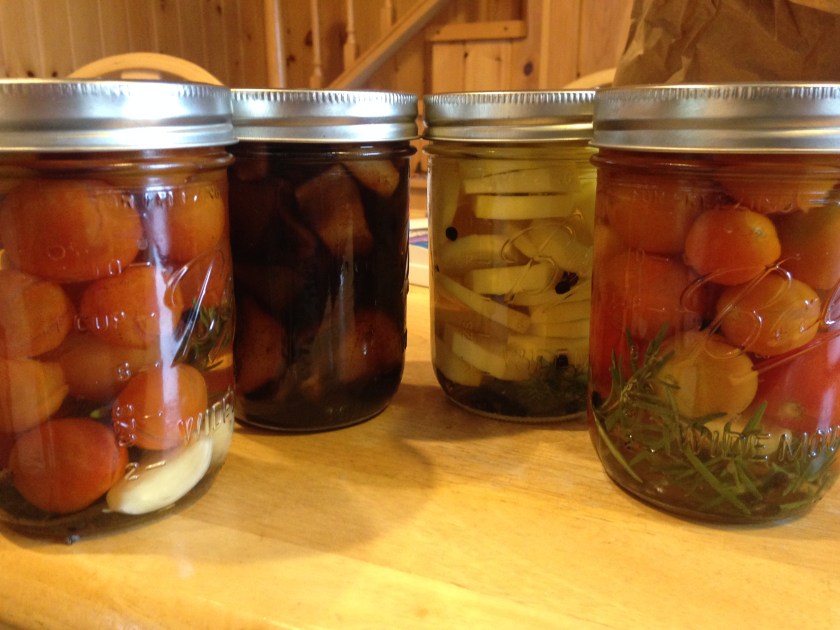
Pickle making is science and art combined, a beautiful experiment each and every time, right up to the moment your guinea pigs (children, grandchildren, and other willing relatives) take the first taste.  Since I started making pickles a few weeks ago I’ve made sour cucumber, garlic dill cucumber, bread and butter cucumber, ripe cucumber, garlic rosemary tomato, garlic dill summer squash, and bread and butter summer squash.  Yup, it’s true.  I’ve been making pickles!  I’ve used tried and true recipes passed down from my grandmother or Dan’s mom, and ones I’ve found online.  Some have been quite popular, others not so much, but all have found a home.IMG_2526.JPG

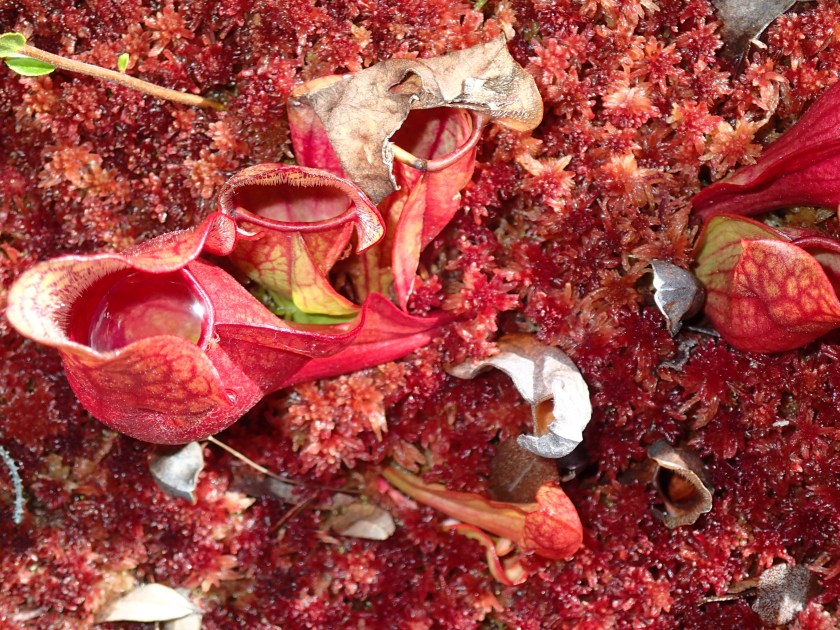
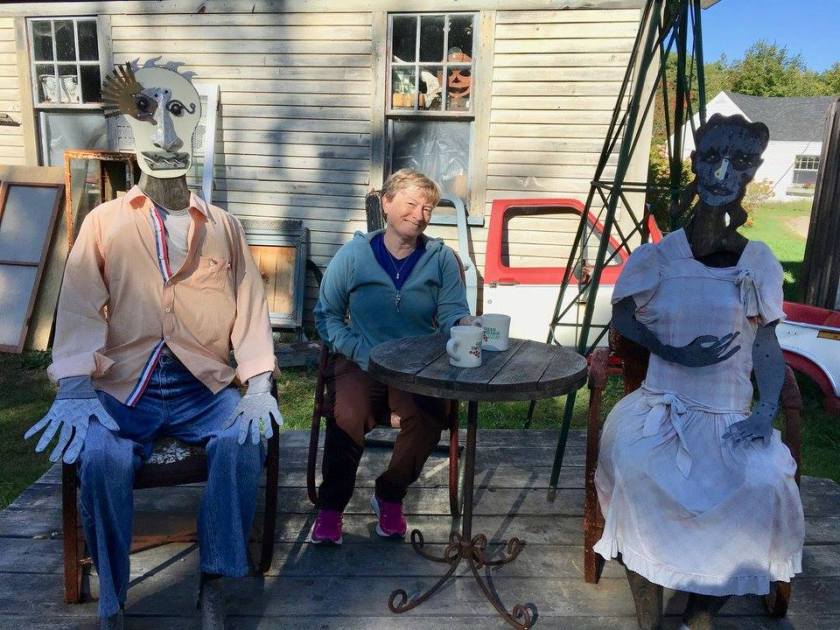
Now pickle making isn’t the only opportunity I’ve taken advantage of.  I’m part of a trio (and that number may grow any day now) that goes on NOW WE CAN adventures.  Now we can, and so we are!  We’ve traveled near and far (nah, not really far), so far going to the Orono Bog Boardwalk, Common Ground Fair, and Nervous Nellie’s.  Just the names make you know we had fun! Here’s some proof!OLYMPUS DIGITAL CAMERAIMG_252822046080_10211986642014460_7954483629869582552_n

And then there’s the hundreds of soccer and baseball games I’ve been to this fall.  Last year cancer kept me from going to many of the kids’ games, but now that cancer keeps me from working, and I’ve started Lorlatinib, I have energy enough to go.  So, go we do!

And on and on it goes!  None of us know what may happen in life, and I certainly never know what news the next scan  or MRI may bring on this cancer journey, but right now I’m just too busy finding joy in the everyday things of life to worry about dying!


Frantic Shanti

Mindfulness, cancer and the stuff in the space between your ears.

polepole ~ breathe

Living with metastatic lung cancer; a story of life, my life, now

Boo Diagnosis, Great Life

NSCLC Stage IV Squamous Journey (Lung Cancer)

Faith, Family & Friends

Living with stage IV lung cancer - By Lysa Buonanno

The Frugal Crafter Blog

Groovy craft projects, crafty recipes and other artsy stuff.

Roads End Naturalist

Exploring the natural world as we wander at the end of the road

Naturally Curious with Mary Holland

An online resource based on the award-winning nature guide - maryholland505@gmail.com

Gray Connections

Perspectives on Lung Cancer, Research Advocacy, and Other Stuff

WordPress.com News

The latest news on WordPress.com and the WordPress community.